
Irish Eurocode 1 wind zones and IS EN 1090-2 CE marking
Every fabricated structural steel portal frame placed on the Irish market must carry a legal CE mark and Declaration of Performance under IS EN 1090-2 (EXC2 for commercial workshops and warehouses), engineered for local Irish wind loads under IS EN 1991-1-4 (24 to 30 m/s across inland to Atlantic coastal zones).
Why UK mainland steel kits fail Irish Atlantic wind checks, and the legal CE paperwork every Irish fabricator must supply.
Free, no obligation. One local fabricator prices it, not five.
- 24–30 m/sIrish wind speeds across Zones 1–4
- IS EN 1090-2mandatory structural steel standard
- EXC2execution class for commercial builds
- CPR 305/2011EU legal basis for CE steel marking
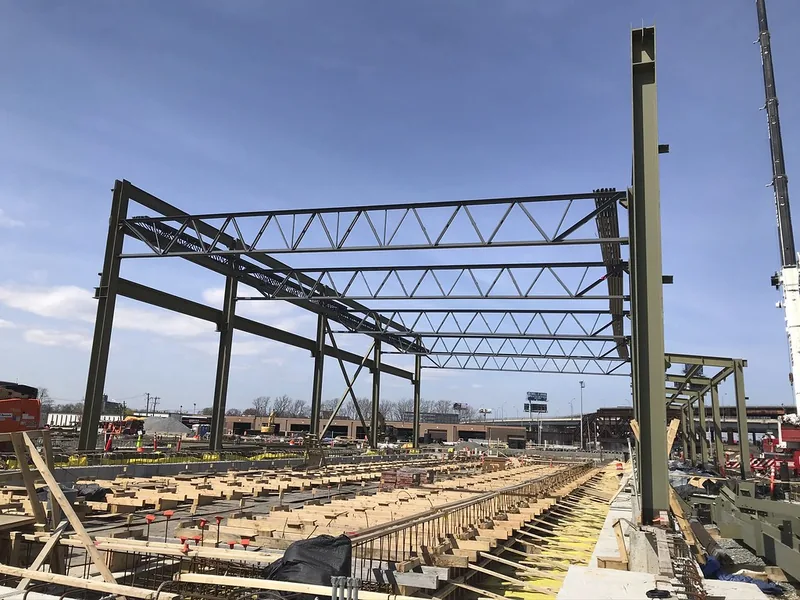
How Eurocode 1 Irish wind zones change steel design
Under the Irish National Annex to Eurocode 1 (I.S. EN 1991-1-4), wind pressure on a portal frame scales with the square of wind velocity. Moving from a sheltered inland valley in Laois or Offaly to a high coastal ridge in Kerry, Clare, Galway, Mayo or Donegal multiplies peak uplift forces dramatically. Imported flat-pack sheds engineered for mild central England wind maps routinely under-size purlins, eave haunches and holding-down bolts for Irish winter storms.
Zone 1 (Inland sheltered)
- Typical basic velocity
- ~24–25 m/s
- Representative counties
- Laois, Offaly, Westmeath, Carlow, Kilkenny
- Design impact
- Standard portal rafter weights and 1.6–1.8 m purlin spacing.
Zone 2 (Inland exposed)
- Typical basic velocity
- ~26 m/s
- Representative counties
- Meath, Kildare, Tipperary, Longford, Roscommon
- Design impact
- Increased roof suction fasteners and end-bay wind bracing.
Zone 3 (Coastal moderate)
- Typical basic velocity
- ~27–28 m/s
- Representative counties
- Dublin, Wicklow, Wexford, Louth, Waterford, Limerick
- Design impact
- Heavier column/rafter sections; C4 marine paint or galvanising near sea.
Zone 4 (Atlantic severe)
- Typical basic velocity
- ~28–30 m/s+
- Representative counties
- Cork (west), Kerry, Clare, Galway, Mayo, Sligo, Donegal
- Design impact
- Deep UB rafters, close purlin/rail spacing, wind-lock shutters and heavy uplift pads.
Price my steel building
Four quick taps and our Irish guide price shows before we ask for a phone number. One local fabricator rings you, not five.
A commercial steel workshop, around 350 m² (200 to 500 m²), 60–100 mm PIR insulated shell erected: €129,500 to €182,000 (€370–€520/m²), ex VAT.
How the m² price is worked out
Figures reflect going Irish supply-and-erect rates ex VAT for CE-marked IS EN 1090-2 portal-frame buildings at typical 4 m to 6 m eaves. Shell rates cover fabricated columns, rafters, purlins, wind bracing, sheeting, gutters and erection on a prepared base. Insulated options add 60–100 mm PIR composite panels and roller doors. Slab options add excavated pad footings and a 150–200 mm power-floated C35 floor. Exposed Atlantic wind zones, rock excavation, three-phase ESB connections and BCAR fees are priced on survey.
Legal IS EN 1090-2 EXC2 documents to demand at handover
- Factory Production Control (FPC) certificate. Issued by a notified body confirming the fabricator is audited to execute EXC2 structural steelwork.
- Signed Declaration of Performance (DoP) & CE label. Legally mandatory under the EU Construction Products Regulation before any fabricated portal steelwork goes onto an Irish site.
- EN 10025 3.1 mill test certificates. Proves S275/S355 steel yield strength and toughness for your Assigned Certifier's BCAR completion file.
- Welder qualification & NDT log. Confirms structural haunch, apex and baseplate welds were carried out by EN ISO 9606-1 certified welders and visually/NDT inspected.
Related steel building guides
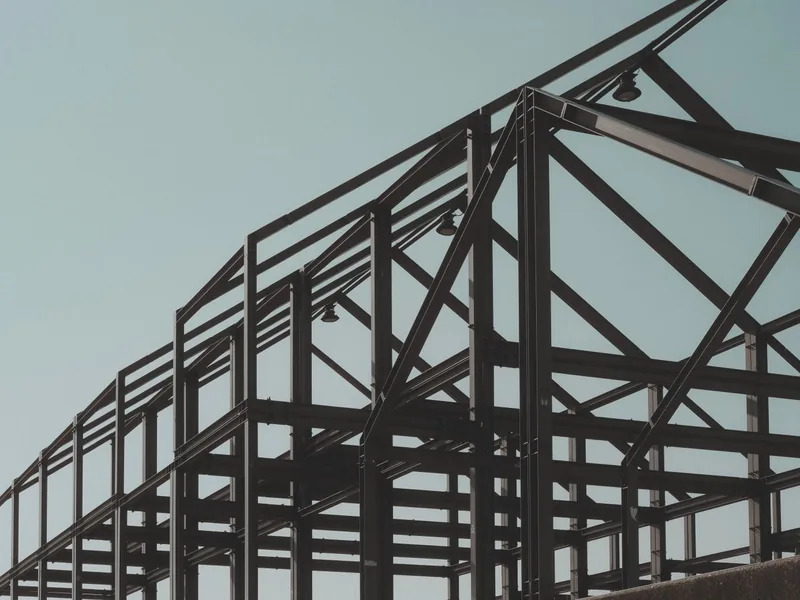 Hot-rolled I-beam framesCE-marked IS EN 1090-2 welded universal beams for wide spans and cranes.
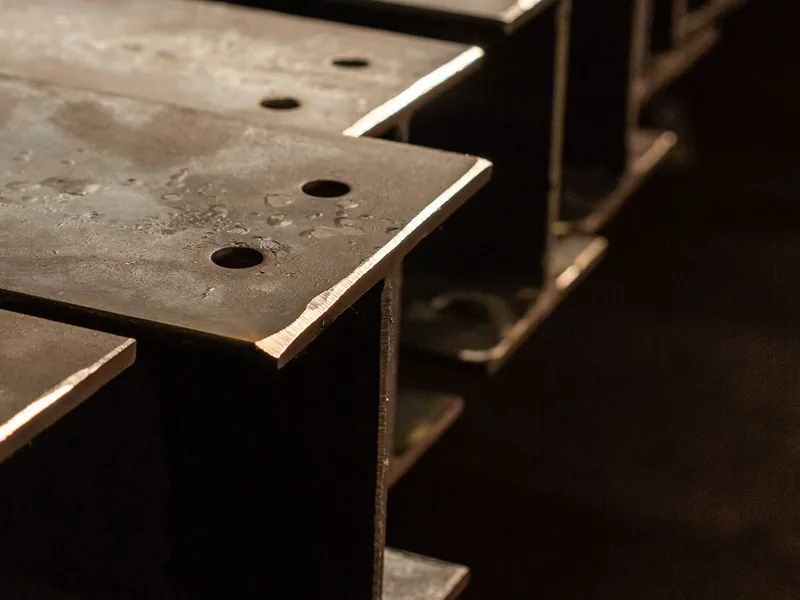 Hot-rolled vs cold-rolledSpan limits, steel weight, crane capacity and erected cost compared side by side.
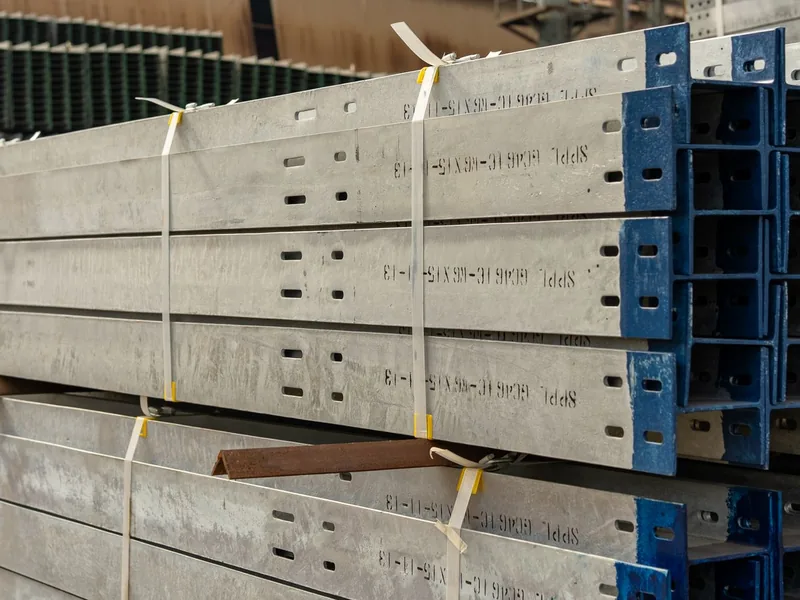 Cold-rolled portal buildingsGalvanised C-section bolt-together spans up to 15 m for light industry.
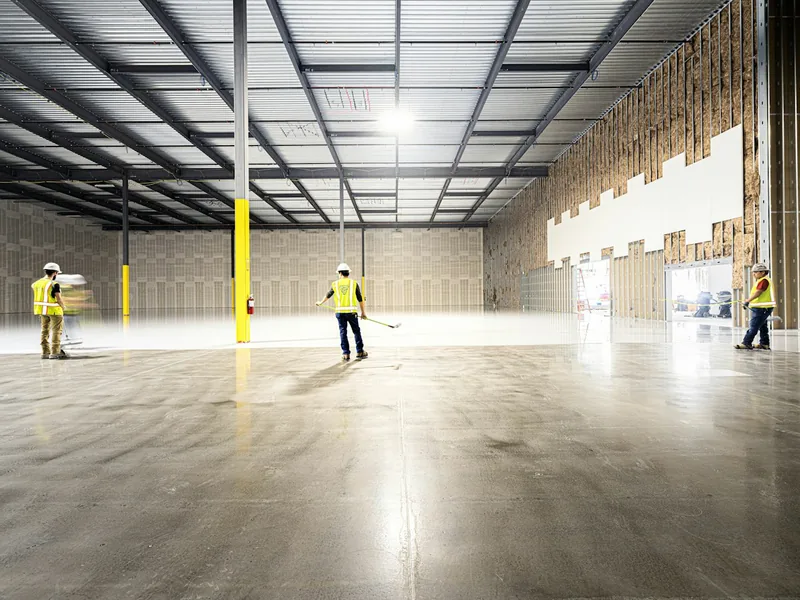 Pad footings & C35 slabsReinforced concrete pads, holding-down bolts and power-floated floor slabs.
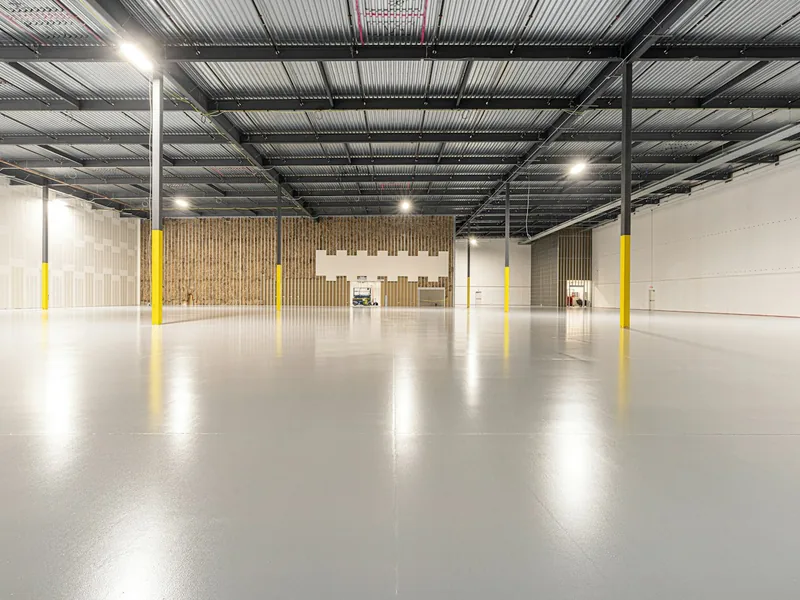 Planning, FSC, DAC & BCARFull commercial planning, domestic 30 m² Class 3 cap, FSC, DAC and BCMS.
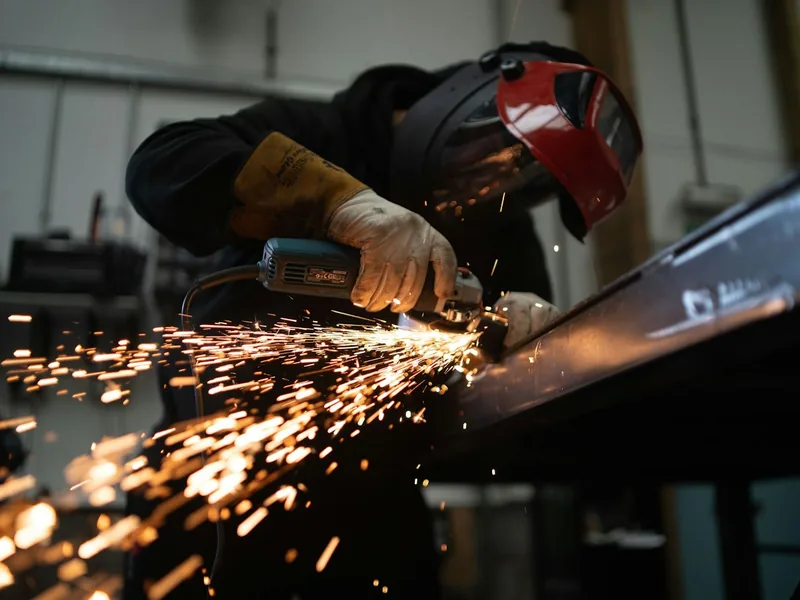 Build timeline & erectionPlanning, BCAR, shop drawings, EN 1090 fabrication and crane erection weeks.
Key questions before ordering structural steel
Is it legal to erect non-CE-marked structural steel on an Irish commercial site?
No. Fabricated structural steelwork placed on the Irish market must be CE-marked to IS EN 1090-1 and executed to IS EN 1090-2. Your BCAR Assigned Certifier cannot sign the Certificate of Compliance on Completion without the DoP.
What altitude and terrain factors matter alongside county wind zone?
A hill site 150 m above sea level with open fields facing west experiences far higher peak velocity pressure than a sheltered business park in the same county. Always give your Eircode at quote stage.
Does snow loading also apply in Ireland?
Yes. Irish Eurocode 1 (IS EN 1991-1-3 Irish NA) sets characteristic ground snow load (typically 0.4 to 0.7 kN/m² plus altitude adjustments and valley drifting on twin-span roofs).
What corrosion coating lasts along Ireland's Atlantic coast?
Hot-dip galvanising to EN ISO 1461 on the primary frame paired with C4/C5 coastal-rated cladding coatings and A4 stainless fasteners prevents salt-air degradation.
Every steel building page and engineering guide
Building types
Engineering & civils
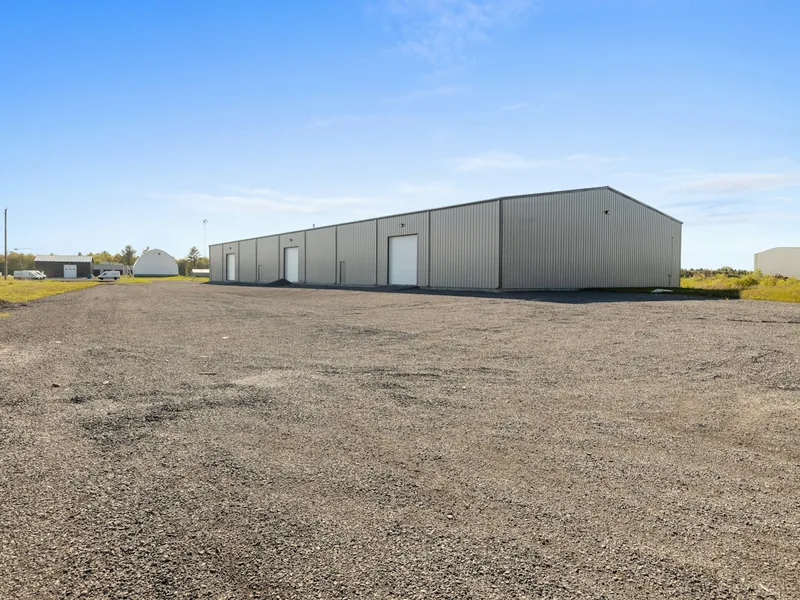
Check your per-m² budget before a fabricator rings
Pick the building type, rough m² footprint and cladding or slab scope. When you want a written tender, your details go to a single Irish steel fabricator in your county.